Roosterfish Fishing in Playa Potrero: What It’s Really Like
There’s a moment on a roosterfish trip that we never get tired of watching happen to someone for the first time.
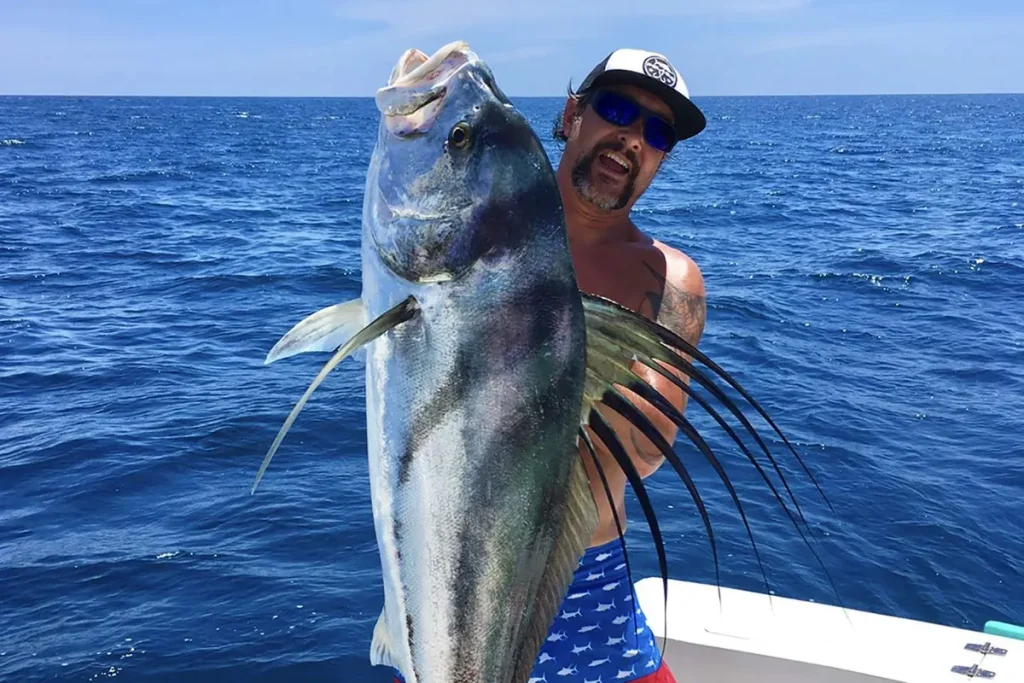
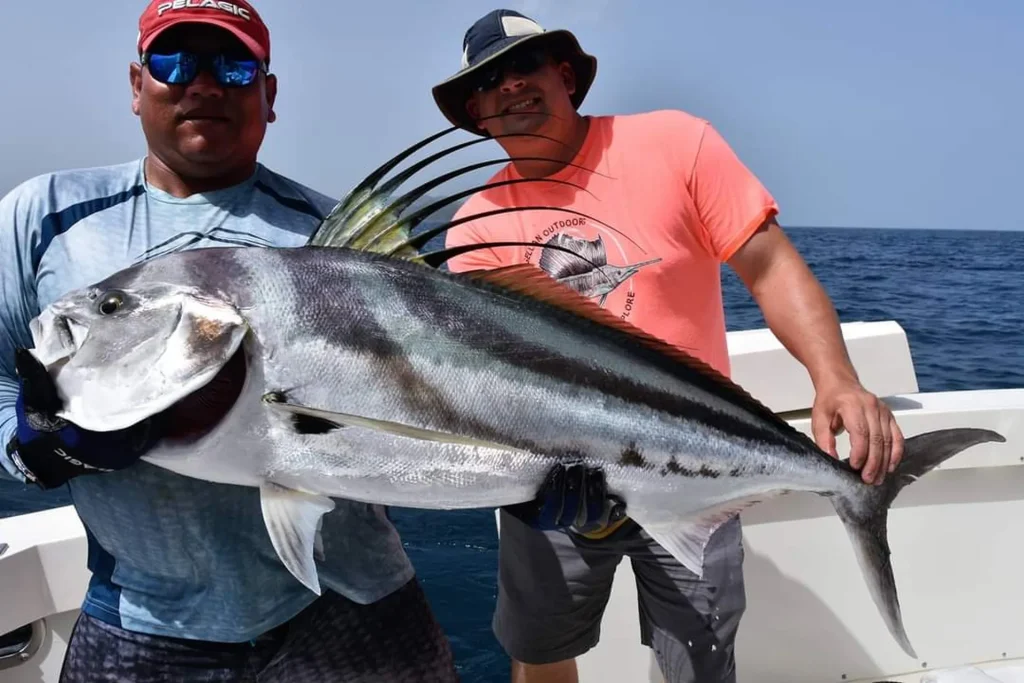
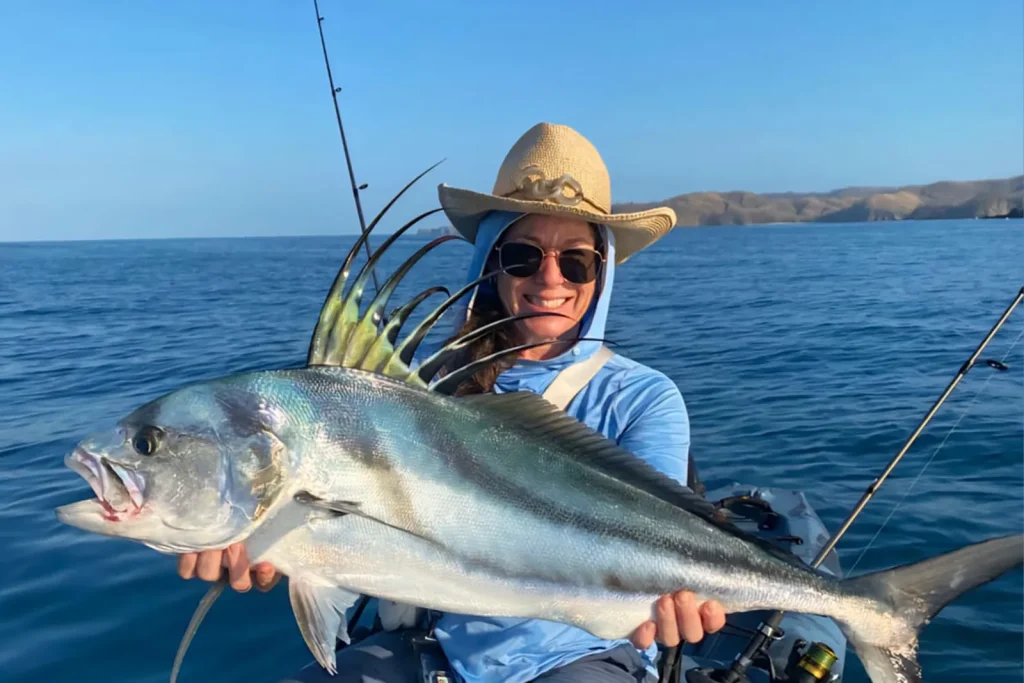
The bait’s swimming a little too frantically. The water behind it goes tight and dark. And then a row of long black spines cuts up through the surface — the “comb” that gives the roosterfish its name — weaving side to side as the fish decides whether to commit. Every angler reacts the same way: a sharp breath, a half-step back, and then the strike. If you’ve never seen it, no amount of describing it really lands. If you have, you already know why people fly across the world to do it again.
This is what inshore roosterfish fishing off Playa Potrero actually feels like. Not the brochure version — the real one.
Why Roosterfish Are Worth the Trip
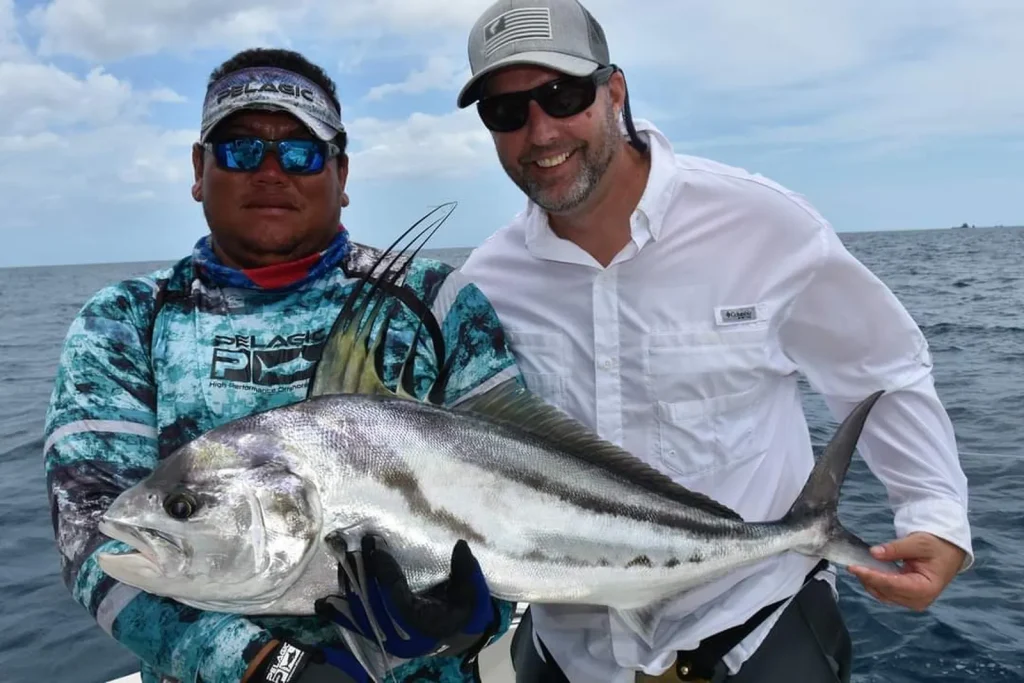
Roosterfish aren’t just another fish on a list of “what you can catch here.” They’re genuinely one of a kind. The roosterfish is the only species in its entire family — there is nothing else quite like it swimming anywhere — and it lives only along the Eastern Pacific, from Baja down to Peru. This stretch of Guanacaste coast is squarely in the middle of that range. You can’t catch one in the Atlantic, the Mediterranean, or anywhere else. If you want a roosterfish, you have to come to water like ours.
Then there’s the fight. Pound for pound, roosterfish are some of the hardest-pulling fish we put people on. The average fish we hook runs around 20 pounds, but the trophies — the ones that make a grown angler go quiet — push 50, 60, and up. They don’t roll over. They run, they dig, and they’ll test whether you actually tied your knots right. If you want to see just how big roosterfish and the rest of Potrero’s inshore species get, they earn their reputation.
Where We Find Roosterfish Off Potrero
Roosterfish are homebodies. Unlike the billfish that roam hundreds of miles offshore, a roosterfish spends its whole life close to the coast — often traveling less than a few hundred miles from where it was born, coming back to the same feeding grounds again and again. That changes how we fish for them, and it’s a big part of why we take catch-and-release so seriously here.
We look for them where the structure is: the rocky points and outcrops, the reefs, the sandy edges where the bottom drops away, and the river mouths where bait gets pushed around. Our charters run out of Playa Potrero and work the coastline all the way up toward Flamingo and the Flamingo Marina, which gives us a lot of prime roosterfish real estate to choose from depending on the day, the tide, and where the bait is holding.
How We Catch Roosterfish Inshore
Ask any captain along this coast and they’ll tell you the same thing: live bait is the tried-and-true way to put a roosterfish in front of you. We slow-troll live baits — lookdowns are a local favorite, along with sardines — right along the edges of that structure. When we’re hunting a trophy, we’ll size up the bait to match. It’s a patient, deliberate style of fishing, and it works.
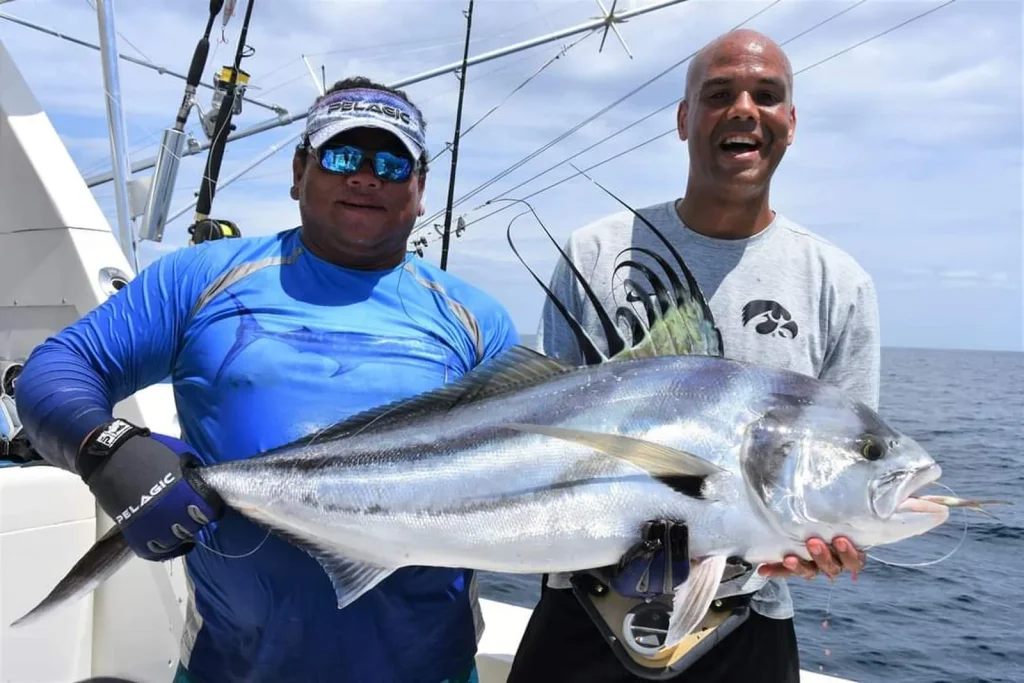
But the method people dream about is topwater. Working a big popper across the surface and watching a roosterfish light up and chase it down is about as exciting as inshore fishing gets. When that comb comes up behind the lure, there’s one rule we’ll be saying out loud from the helm: don’t stop reeling. Every nerve in your body will want to set the hook the second you see the fish. Don’t. Roosterfish will swipe, miss, and come back — sometimes twice — and the anglers who keep working the lure through the adrenaline are the ones holding the fish at the end. It’s the hardest, most fun instruction we give all day.
When to Catch Roosterfish in Playa Potrero
Here’s the honest version of the seasons. Roosterfish live here year-round — they don’t migrate out — so there’s really no closed door. What changes is the pattern.
The dry season, roughly December through April, brings the clearest water and the most consistent conditions. Clear water means a better visual hunt, both for the fish and for you watching it all unfold. But don’t write off the green season. When the rains come from May into the fall, they push baitfish toward the shoreline and into the river mouths, and that concentrates the roosterfish right where we want them. Some of our best inshore days happen in what people assume is the “off” season.
Why We Release Every Roosterfish
Because roosterfish stay local their whole lives, the fish we release today is very likely a fish that’s still here next season — and the season after that. That’s not an abstract conservation slogan for us; it’s how this fishery stays good. Every roosterfish we catch goes back. Our crew handles them carefully, keeps them in the water as much as possible, and gets you a photo you’ll actually want before the fish swims off strong. Protecting the population is the whole reason there’s still a population worth chasing.
Ready When You Are
A roosterfish day off Potrero is inshore fishing at its best — close to that green jungle shoreline, sight-hunting one of the most striking fish in the ocean, with a crew that’s done it enough to put you in the right water at the right time. We can’t promise a 50-pounder on your first cast; nobody honest can. What we can promise is that when that comb comes up behind your bait, you’ll understand exactly why we love this.